Moruri finds road destroyed by cloudburst
6 March 2024
Innovation declined to security
15 November 2024Dry foundation research project now awaiting international patent. Trentino company leading the industry by “copying” ancient Viking technique
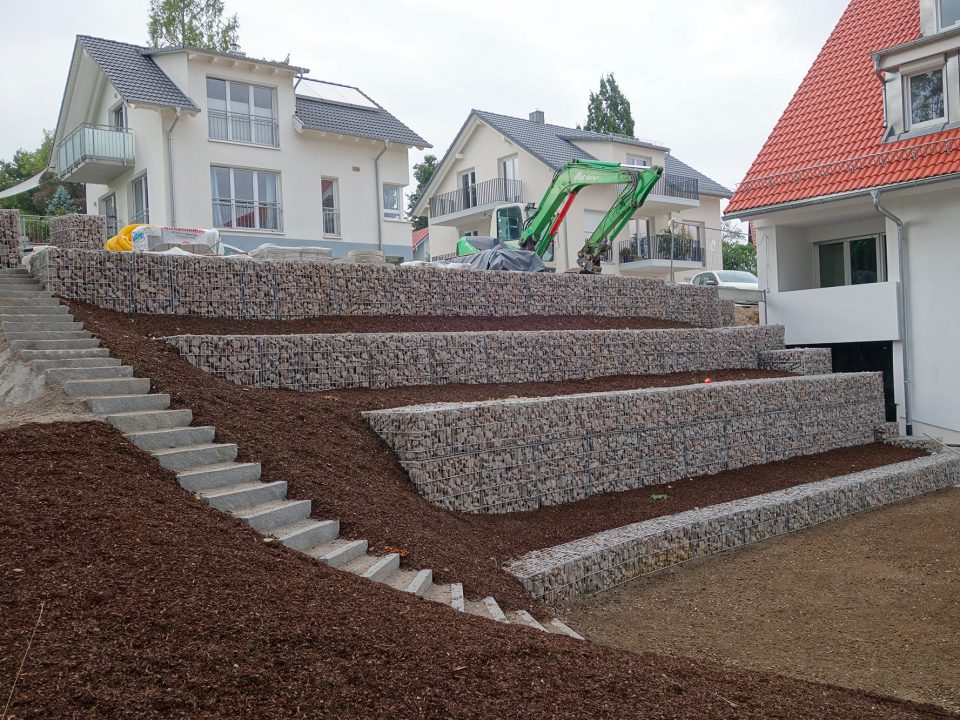
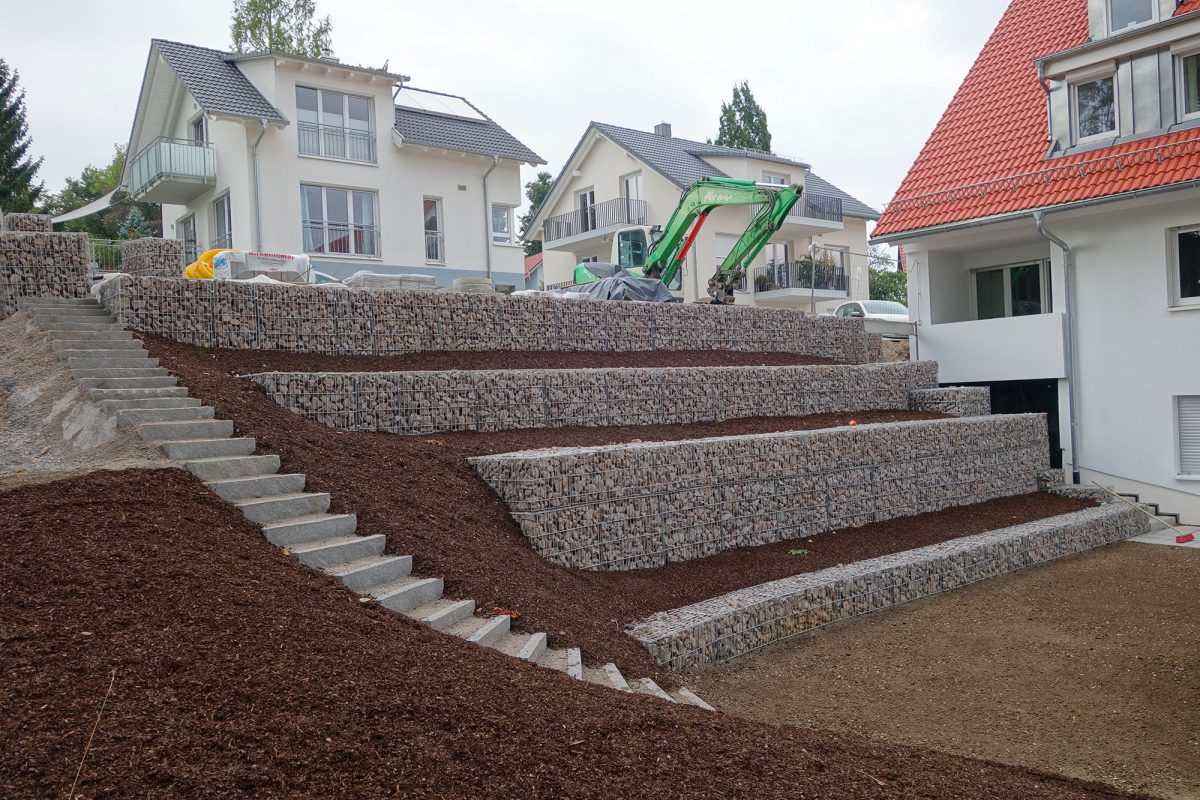
It rests its foundations on the ancient knowledge of the men of the mountains and the Great North (and as we will explain later, it is no coincidence that we write like this) the innovative project of Metallurgica Ledrense, a thriving company from Trentino that has been active since 1987 in the production of the highest quality galvanized and black polished wire for agriculture and industry, and that has been making a name for itself internationally for the past few years for its electrowelded mesh gabions, both as architectural elements for parks and gardens and as CE-marked retaining walls. After being the first company in Italy to have its steel mesh filled with material (stones) used to build retaining walls certified in Europe (one of the tallest of its kind, built more than a year ago in Colleferro in the province of Rome, is its own), it is now waiting to obtain CE marking from Brussels for an innovative product: that relating to special gabions tested to act as foundations for lightweight wooden structures. The idea came from Fabio Tiboni, president of Metallurgica Ledrense, to support wooden structures to be built quickly, for example, prefabs used by the Civil Defense in cases of disasters (such as those we have seen in recent years in L'Aquila and after the earthquakes in Central Italy), but also residential buildings.

Compared with traditional concrete slabs, these foundations have the advantage that they can be laid “on site” in very little time, since the gabions (2 meters long by 1 meter wide and 50 cm high, weighing 1,850 kg each) are already assembled in the companyda and ready for use.
The idea for this innovative and fast-drying foundation system actually originated over a thousand years ago in Norway with the Stavkirken, churches that were built by the Vikings on stone foundations on top of which were placed beams connected to each other to create a rigid plane, above which the pillars and por-tant walls were raised. The same criterion - on closer inspection - traditionally used for alpine huts.
But if the idea is ancient, the technology is as modern as it gets.
Behind the dry foundation system,“explains Metallurgica Ledrense technical manager Simone Graffer,” there is in fact a 42-month research project that involved three Trentino research departments (two from Engineering, the CNR, and the Institute for Bioeconomics IBE from S. Michele all'Adige) with an investment of 500,000 euros.
From durability tests of the steel part of the gabions to simulations of loading and unloading to withstand snow, wind and seismic events in the so-called “heavy laboratories” in Mesiano, the research project involved dozens of researchers, who also measured themselves in the study of a vibrating contraption to better compact the stone material inside the gabions.
Now Metallurgica Ledrense is waiting for the CE marking to be issued to market the product.
"We already have contacts with several Swedish, English but also Italian companies that are interested in our product," explain partners Alessandro Dalla Costa (sales manager) Stefano Tonini, who stress the importance of European certifications to present themselves with competitive advantage in the market. "It was not a quick and easy path," they continue, "We did not look so much at the expense that the research project would cost us, but at the opportunity to be the first to propose an innovative and fast dry foundation system.
After all, at Metallurgica Ledrense they are no strangers to challenges: the idea of building the retaining gabions (and certifying them) was born almost by accident some 15 years ago and has led a small valley company that produced iron wire to become an international leader, with a turnover of more than 10 million (including 3 from the gabions) with 13 partners and a dozen employees.